How to Spot Fake Accounts Online who are using your Favorite Influencers Vibes to Spread Misinformation.
To make this concept a bit easier to grasp and for my audience to get a better idea I will be creating content where I intentionally will be acting like a well known individual to show how easy it is to mislead people on social media platforms especially TikTok.
Throughout these examples online I will not be pretending to be an actual person but i will be copying familiar styles, using a realistic scenario like other influencers, and show how small edits or context changes can completely shift a message and make people believe what I am saying without taking the time to fact check the information I am talking about.
Why I think this is important
I wanna show people how easy it is to be fooled online. When something seems super real and legit coming from a girl who sounds and acts like an influencer just talking nonsense people are likely to trust it and share it with their friends especially when the person in the video feels like someone whose content an audience would want to watch. By recreating similar content users might see online, i can help my audience understand how convincing misinformation can be when it is similar to content they see from popular influencers and other people who go viral online.
Target Audience
With the examples I will be giving I have chosen my target audience as young adults ages 17-25 because they are frequent users of social media platforms like Instagram and TikTok. A lot of young adults also choose to receive their information from social media so I think showing them these examples as educational tools will help them avoid misinformation. Young adults are also heavily connected to influencers, many people in this age group trust and look up to influencers with many aspects of their life. They also follow a lot of the similar things influencers like or do and are very likely to spread or believe what their favorite influencer might be saying or doing online.
Intent with Educational Tools like this
After looking at these examples I hope that my audience will be more prepared to catch misinformation within a creator online that is trying to act like other popular influencers, understand how editing and tiny details might convince someone of misleading information, and be more cautious when it comes to seeing content that is tied to influencers they might follow.
PSA: These videos and other examples will simply just be for learning purpose online in the effort to stop the spread of misinformation online. I will be labeling this at the end of each video you will be seeing. Viewers will understand that this is just a simple example of how misinformation spreads online and not a real post from a user.LEARNING PURPOSES ONLY
Examples of Content:
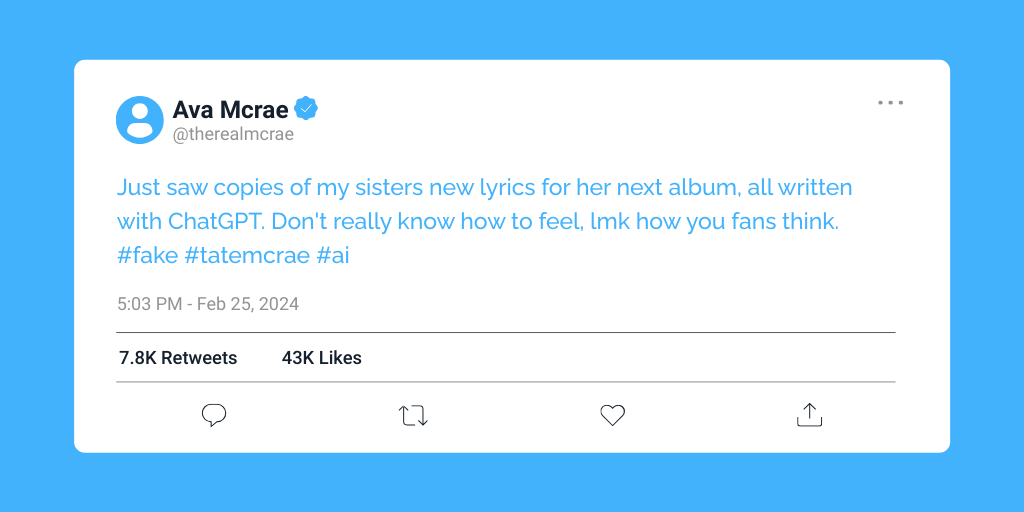
EXAMPLE 1: of a fake twitter post impersonating a famous artist sister to spread fake news about her not actual real content.
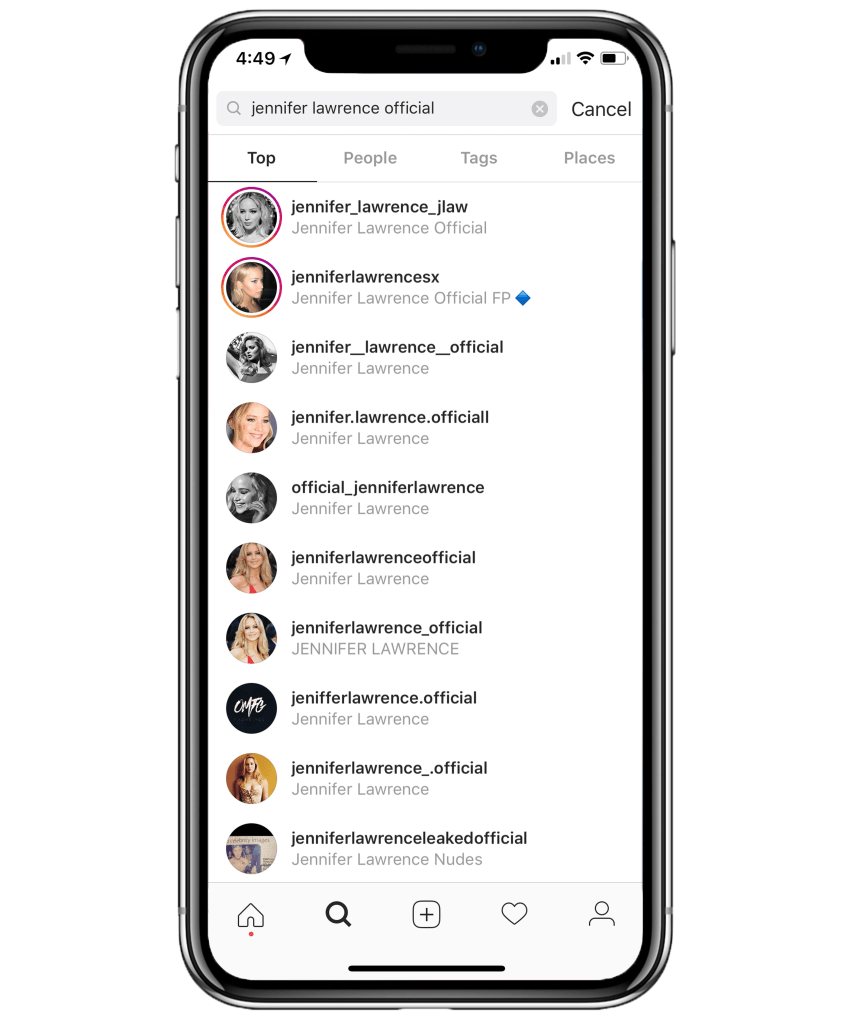
EXAMPLE 2: This shows how many fake user accounts there are. Now a days people can pay to be verified so you want to be double checking that you are following the correct celebrity or influencer online. This is not real content.
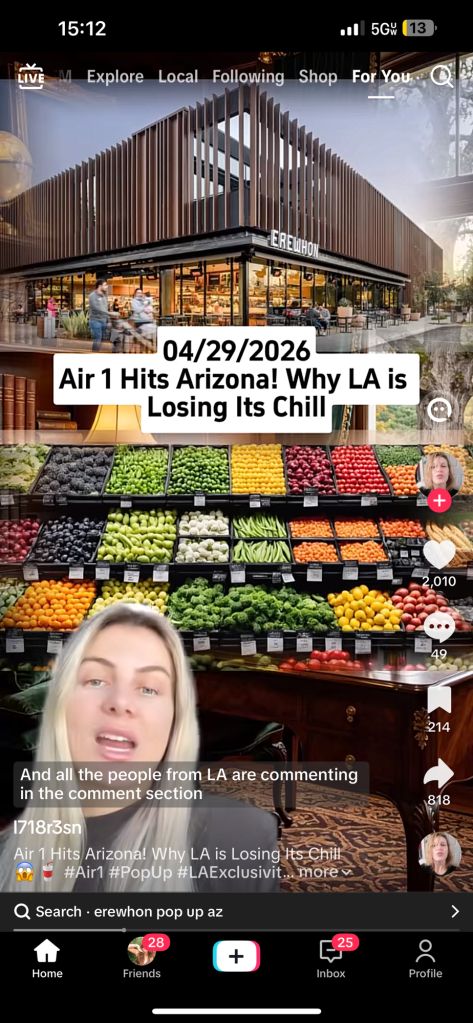
Here is another example of something you might see online that could be misleading. It claims that Erewhon the famous LA grocery store is coming to Arizona. There are no sources even though this video seems super convincing and professional. I double checked and found out it is not true. This is why double checking videos claims is a big tool when it comes to debunking misinformation.
Do not engage with users you might not think are legit. Click on their account and double check everything. If it is very shocking, dramatic or sounds too good to be true take a step back and really think about what is being said that you might be believing. So much content out there that is misleading comes from accounts that look real but they are not, take the time to see if this is a fanpage, the actual creator, or trolls impersonating famous users. Do not trust a comment section, do not share it unless you are sure, and overall just trust your gut.
Why I think this will work.
According to the National Library of Medicine, learning is increased from looking at creative visuals to enhance their educational experience. My approach incorporates a visual experience that is similar to a real life scenario people might be seeing online. This shows people what they should be doing when they see something like this. Using a familiar format like TikTok, Twitter, and Instagram the lessons become much more relatable for people and memorable to apply to their everyday scrolling on social media platforms.
Misinformation can be found constantly through our daily lives. I do not believe it will fully ever go away, but I think that taking the time to get the resources to educate yourself on what to do when misinformation is right in front of you is highly important in the effort to stop it.
 Ava Rene Papadakos explores “Misinformation & Society”
Leave a comment