Misinformation is found everywhere especially since so many platforms now a days are meant for spreading content and information online. Misleading content also stems from platforms that have more visual and algorithmic stuff on them increasing misleading content being spread around. Two platforms I am frequently active on are; TikTok and Pinterest. They both have tried to counter misinformation through analyzing their policies and and practical cases of their effectiveness but there still is a major difference between the two platforms.
In accordance with TikTok Ads Policy, the social media site does not allow misinformation or fabricated content that can lead to potential damage to individual people or public safety such as misinformation surrounding a crisis, election, or public health matters. It also does not allow any form of conspiracy theories and distortion of actual events or falsified advertising information.
Some other measures TikTok takes aside from advertisements include: Collaboration with third-party fact checkers, use of labels and warnings, limiting the spread of unverified information, and incentives to have users verify their posts.
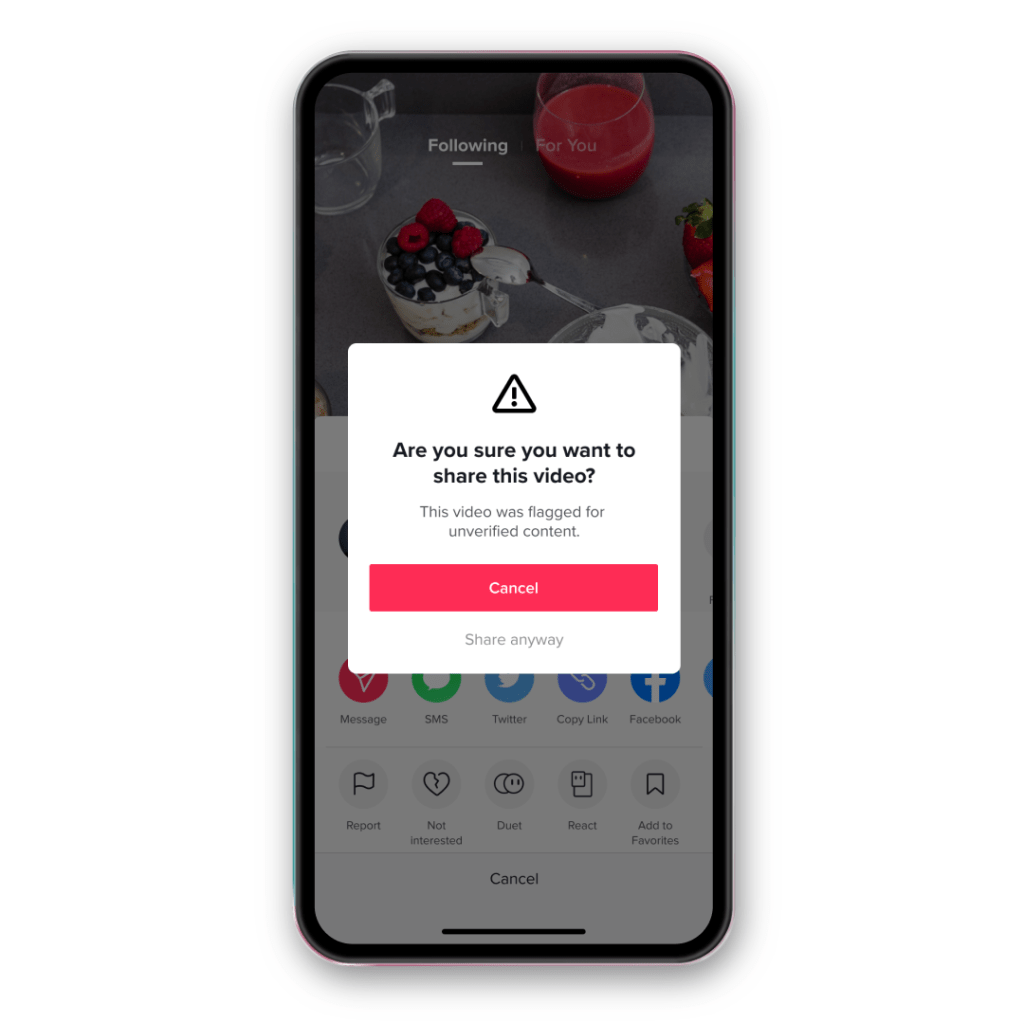
For example, TikTok’s approach to fighting COVID-19 misinformation was by placing banners directing users to credible sources and deleting misinformation. Even now this is still very common on the platform whereby looking up certain topics messages are prompted to users about verifying information.
In my personal experience, I have seen a ton of warning messages and warning signs on pop ups but simply just ignore them at certain times because I find myself frequently just scrolling and not paying attention at times to what I am looking at. Several videos are framed in a very personal matter to where it seems believable to myself or other users at times.
Evaluating the Effectiveness on TikTok
While TikTok’s guidelines on paper seem pretty solid especially when dealing with their direct stop to preventing dangerous misinformation. They lack with their enforcement and timeliness leading to problems.
Due to the nature of TikTok’s algorithm favoring engagement the potential for misleading content to be shared before proper verification is very possible.
While moderation may include labels or removal of fake content, sometimes it is often too late since information can spread so rapidly on TikTok. Furthermore, with the ease of reposting from users, moderation becomes an issue itself. Even though TikTok does a good job at mitigating misinformation prevention once posts are up is somewhere they are lacking a bit.
Pinterests Approach
Pinterest has a very different approach. Instead of dealing with the spread of information afterwards, Pinterest attempts to prevent any such content from even being shared online in the first place.
The platform has a set of policies that ensure no information related to health, safety, and civic processes that are misleading get put out on their platform from their creators.
However, the factor that sets Pinterest apart is its use of both its policies and technological advances, especially those related to machine learning.
As mentioned in the Pinterest Engineering Blog , the platform uses machine learning models to automatically recognize and get rid of content that could be harmful which includes medical misinformation without making users even flag it.
This proactive system proved to be effective, as demonstrated by Pinterest’s report showing a 52% decrease in policy-violating content reports per impression and an 80% drop in reports of self-harm content. It indicates that proactive measures could be quite effective in minimizing user’s exposure to harmful content.
From personal experience, Pinterest is a very curated experience for its users. I personally have never seen any content that could be misleading on the app except for maybe diet/food related content but nothing that could be directfully harmful to people or our society.
Evaluating the Effectiveness on Pinterest
Pinterest has such strength because of its approach which is based on preventive technology measures. Machine learning techniques from the platform are helpful in preventing the spread of any misinformation before it is even possible of it happening.
There are a few downsides which include; user transparency is not always maintained. Secondanly, over-moderation could mean too many restrictions on the type of content that is being shared on the platform making it safe for users to use but could potentially be limiting user discussions.
How Platforms Could Improve and What is Missing
Both platforms are evolving in the sense of preventing misinformation on their platforms but neither platforms are fully grasping the issue of misinformation completely and could be doing a better job.
The best thing that TikTok could be doing is slowing the spread of viral content before it is fully verified. Another improvement TikTok could be making is ensuring that users are reading all warning messages before they are spreading content they see online and maybe TikTok could be incorporating more safety messages with all types of content so people get used to seeing these messages more frequently when they are scrolling.
Pinterest does a pretty good job but they could be improving their communication with their users. They could also be enhancing its media literacy tools to enable users to analyze types of information before it is being posted on the platform.
 Ava Rene Papadakos explores “Misinformation & Society”
Leave a comment