Is the claim “chicken and rice is bad for you” misleading?
A claim I have recently heard is that chicken and rice is bad for you. I first heard this from a friend during a conversation about dieting and healthy eating. They mentioned that rice is just “too many carbs” and that eating it frequently can be bad for you. After that conversation I noticed I was seeing the claim on social media as well especially on Instagram and TikTok. I saw fitness influencers posting things saying “cut out rice” or labeling meals like chicken and rice as “not clean eating”. Because this is something I honestly eat regularly and thought was a pretty healthy meal I needed to look more into this claim.
Step 1
The first red flag for me was how broad and absolute the claim was. Saying something is just “bad for you” without any context is usually a sign that the information might be misleading. I also noticed that neither my friend nor social media posts explained why rice and chicken would be unhealthy, they just stated it as a fact.
Step 2
Since this claim was a little odd to me when starting my research into the claim I decided to break it down into three different questions:
- Is rice unhealthy?
- Is chicken unhealthy?
- Is there any reason eating them together would be harmful?
I figured this would be helpful to focus on evaluating each part instead of the general statement.
Step 3
The next thing I decided to do was search for reliable sources. I searched online using terms like “Is rice bad for you” and “Is chicken healthy for you”. I only was looking for trusted health organizations that have a lot of research backing up the info on their websites.
According to the Physicians Committee for Responsible Medicine chicken products contain cholesterol, carcinogens, and contaminant which came as a big shock to me as I have always thought chicken was always super healthy so I did more digging.
Step 4
Next I decided to evaluate rice and chicken individually.
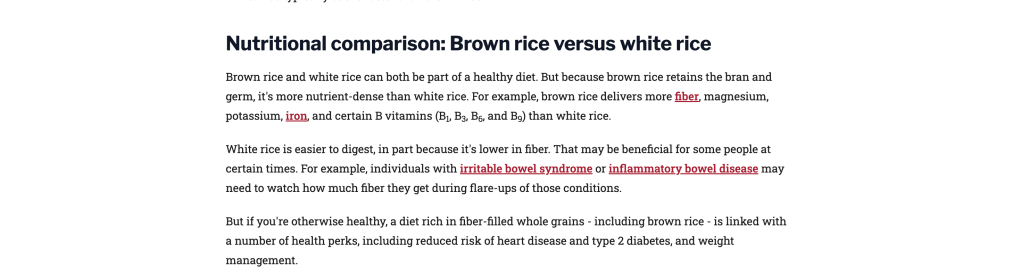
I learned that rice itself is not unhealthy. According to the Harvard Health Publishing brown and white rice can be both part of a healthy diet with both having positives for different medical concerns.
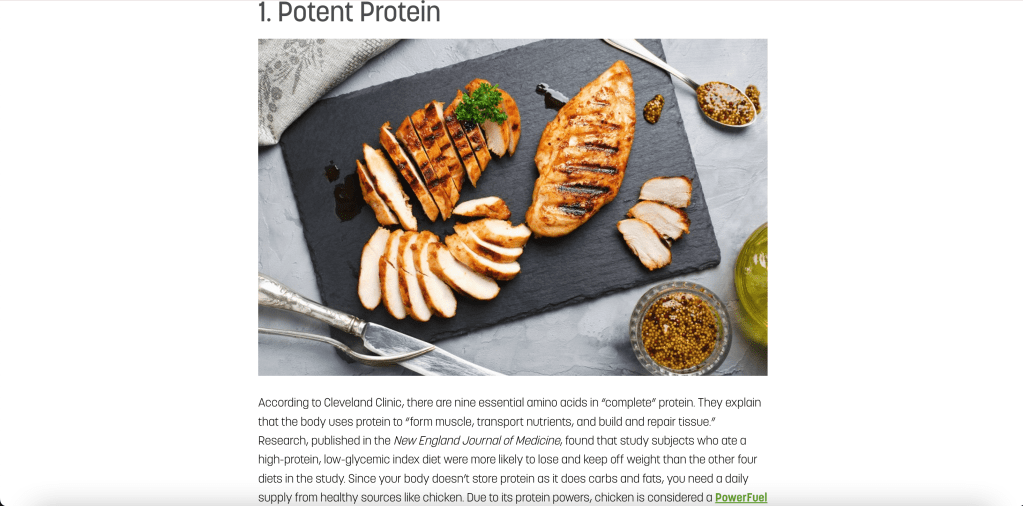
Second, I learned that chicken is widely considered a healthy protein, especially when it is grilled or baked. According to The Leaf which incorporates a lot of reliable health sources on their site chicken has numerous health benefits including it being a potent protein, low calorie/fat, high potassium, and lower cholesterol as a serving of boneless skinless chicken breast comes with less than one gram of saturated fat which means chicken cooked the right way will have less harmful low density lipoprotein (cholesterol) going against the earlier claim that I saw reassuring me chicken can be healthy depending on the way it is served.
Step 5
At this point I have realized that the claim made by my friend and by social media posts the claim is mainly just coming from diet trends and not scientific evidence. For example, low carb diets often discourage foods like rice which can lead to people just labelling it as “bad”. Social media can amplify these ideas because short videos are a lot easier for learning information then taking the time to do your research on the foods you are consuming.
Step 6
The phrase “bad for you” is very vague and does not explain anything specific. This is another sign that the claim is not reliable. Nutrition is very complex most foods are not “good” or “bad”. It depends on portion size, preparation, and overall diet.
Final Conclusion
After going through this process I came to the conclusion that “eating rice and chicken is bad for you” is misleading. Both foods can be part of a healthy diet when eaten in reasonable portions and prepared in healthy ways. The claim seems to come more from personal opinions and popular diet trends than from strong scientific evidence.
This experience showed me how easy it is to hear something or see it online and just believe it because someone who seems or looks reliable said that. It also showed me the importance of taking a step back, asking questions, and checking reliable sources. By doing this, we can avoid spreading misinformation and make better decisions about what we eat and what we believe.
 Ava Rene Papadakos explores “Misinformation & Society”
Leave a comment